Ancestry Mosaic
Discover the culture and heritage behind your DNA
Role
Design lead / Prototyper
Team (original)
1 Design director / 3 user researchers
AncestryDNA lets customers find out their ethnicity estimate through DNA sample submission. Customers can then use the AncestryDNA digital product to explore more details of their ethnicity breakdown, including ancestry origins and regions, DNA matches, and DNA traits.
The problem
Through customer research, we found that many customers wanted to go beyond the DNA science and know "what does it mean Irish, Norwegian, German" and more.
We also knew that between our family history and science products, there were new users and heavy users, but not much in between.
Building family trees requires time, energy, and a lot of interest.
Submitting a DNA sample provides customers with science data points but not much else.
A solution
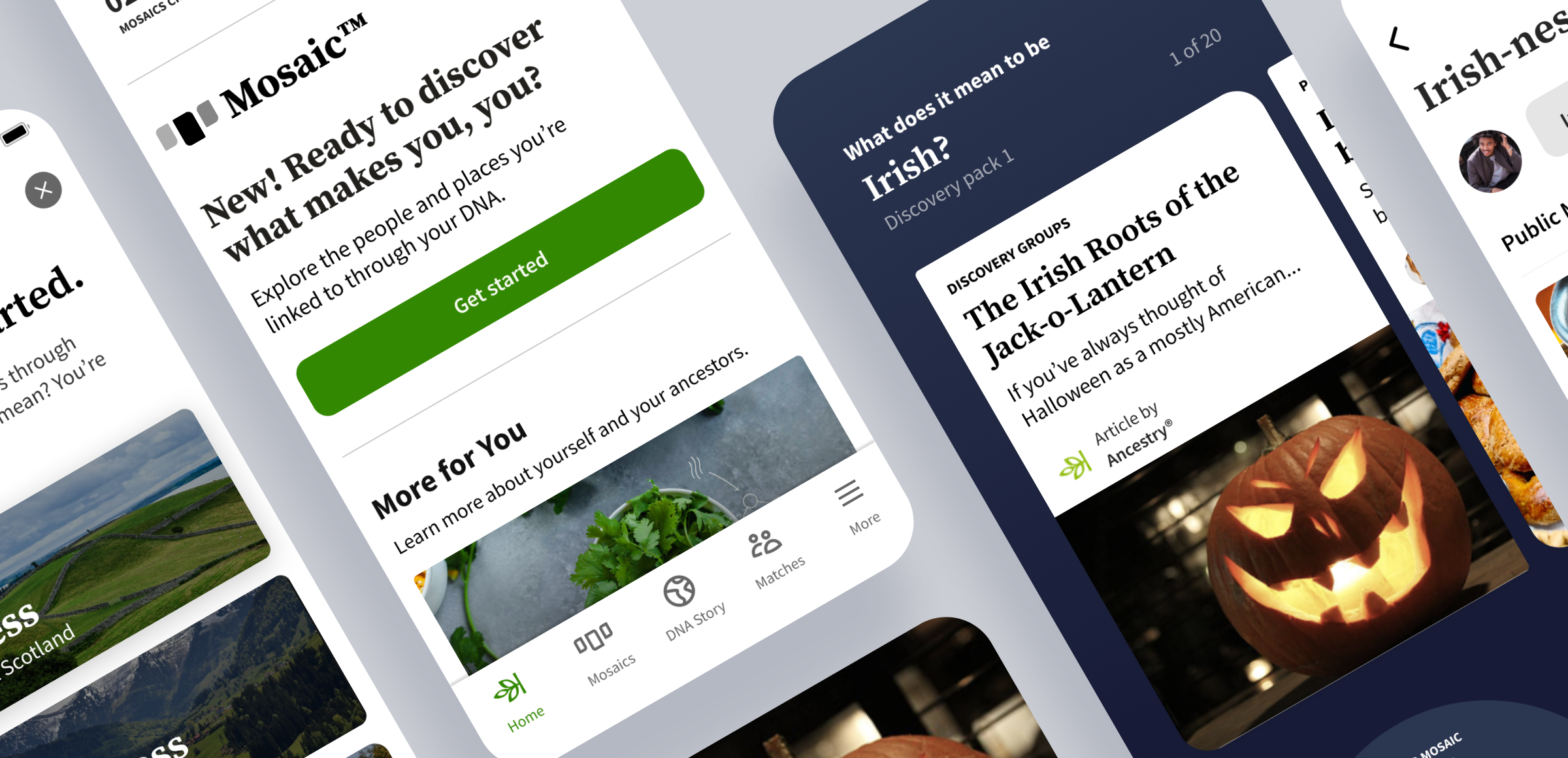
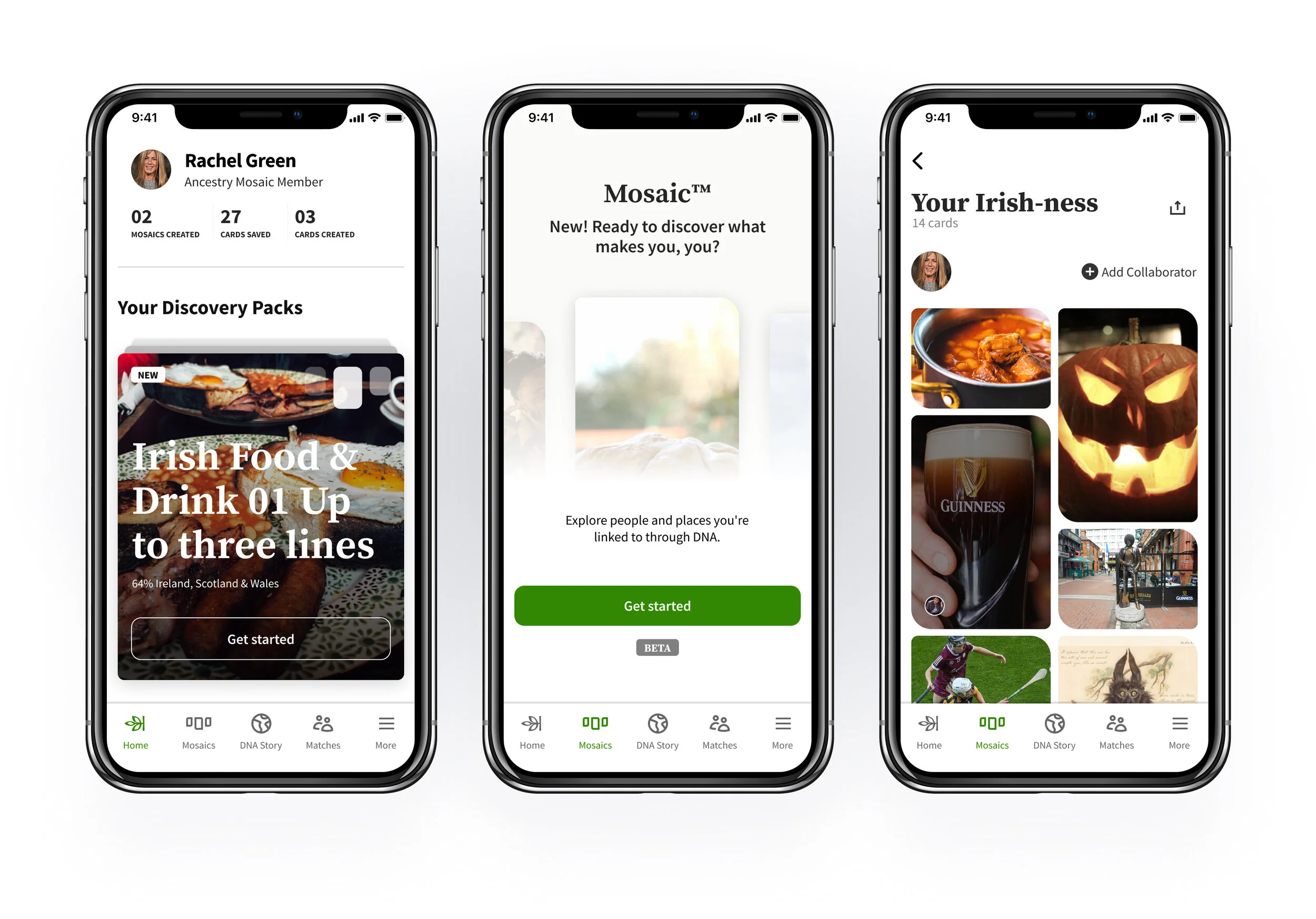
Mosaic’s vision was to connect people with cultures, traditions, values, lifestyles, foods, and more from the DNA they inherited from around the world. Our hope was to create a product that gave our customers cultural information in a fun way that would allow them to build out sharable collections to see and learn from.
Discovery belt
The discovery belt was the primary focus of the product and drove the vision of crafting and creating a mosaic. The idea was to give our customers a mechanism to craft their own ideas of what it meant to be connected to a culture through provided and user generated content. Customers selected a “pack” that brings them to the discovery belt. Each belt had a set of collectible cards that enabled customers to build out their mosaic which could be shared to others to learn from or about the the interests of the particular parts of the culture you felt connected with.
Ideating on a concept
After several rounds of brainstorming, a concept was chosen. This concept was very loose with the idea of a never ending baggage carousel of varying things customers could choose to collect. I worked on several interactive prototypes to bring this idea to life and present it to leadership. It was through this form of presentation that this idea was decided to move forward against others.
Prototype 1
Displaying the idea of moving through layers.
Prototype 2
A prototype giving the sense of a constantly moving conveyor belt to pull from.
Prototype 3
Calling attention to this new feature through a peeking CTA in the existing Ancestry DNA mobile app.
Moving forward to flesh out the concept
Once the concept had been narrowed down, I moved into designing low fidelity wireframes and slight branding ideas to give Mosaic a look separate from our other products. The idea was to bring in a fresh look that spoke to a different type of customer looking to fulfill what our current products lacked, an in depth look into culture that felt more immersive and touch-able.
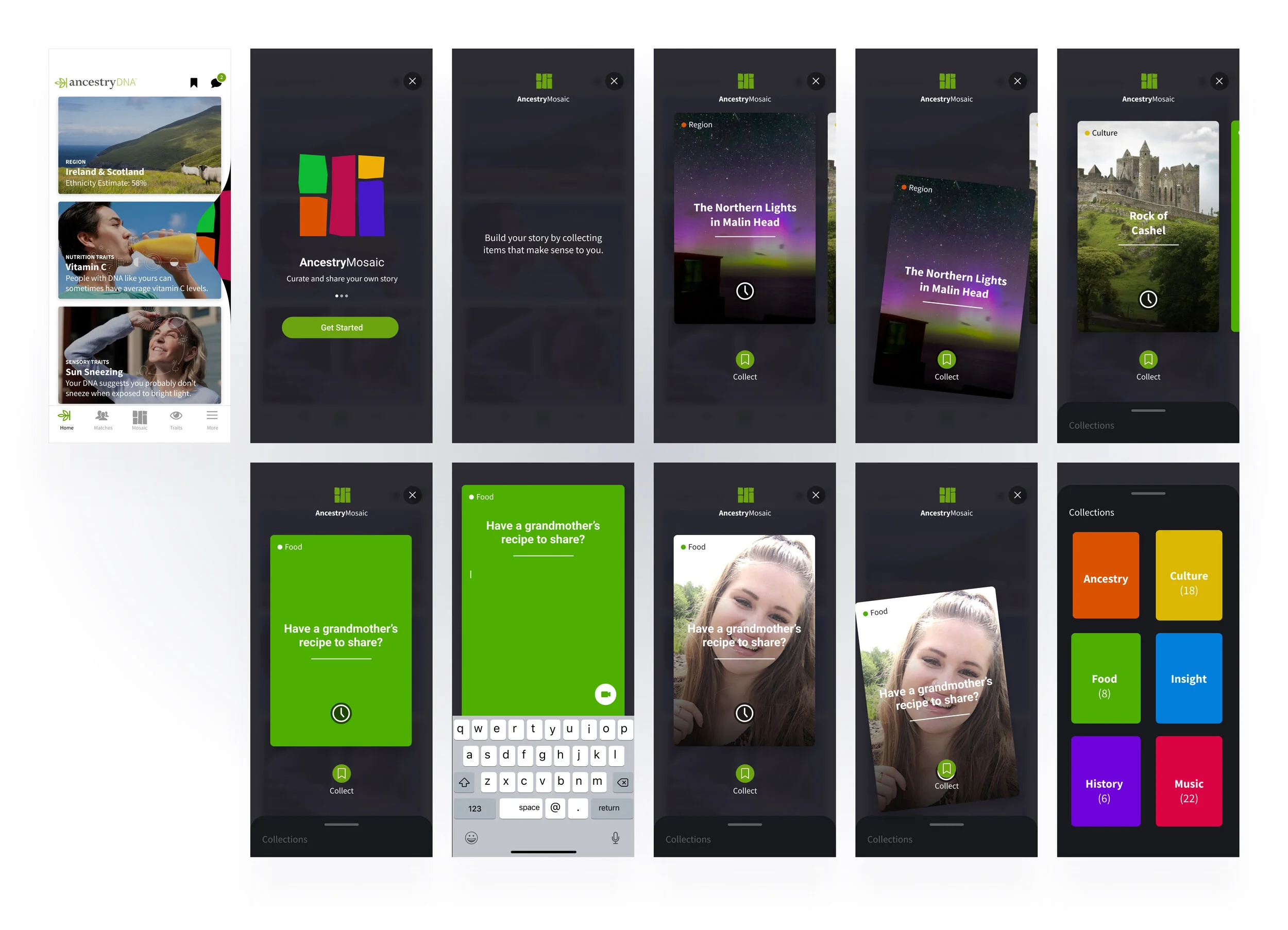
The initial idea for the discovery belt was to peek into the current AncestryDNA UI.
The movable belt
An initial idea that was part of thew original concept and seemed to resonate with some of the leadership tested badly with most research participants, primarily due to the timing and the loss of control. Though we worked hard to save this interaction, the research showed otherwise and was removed giving users better control of the pacing of the presented items.
Timer mechanism
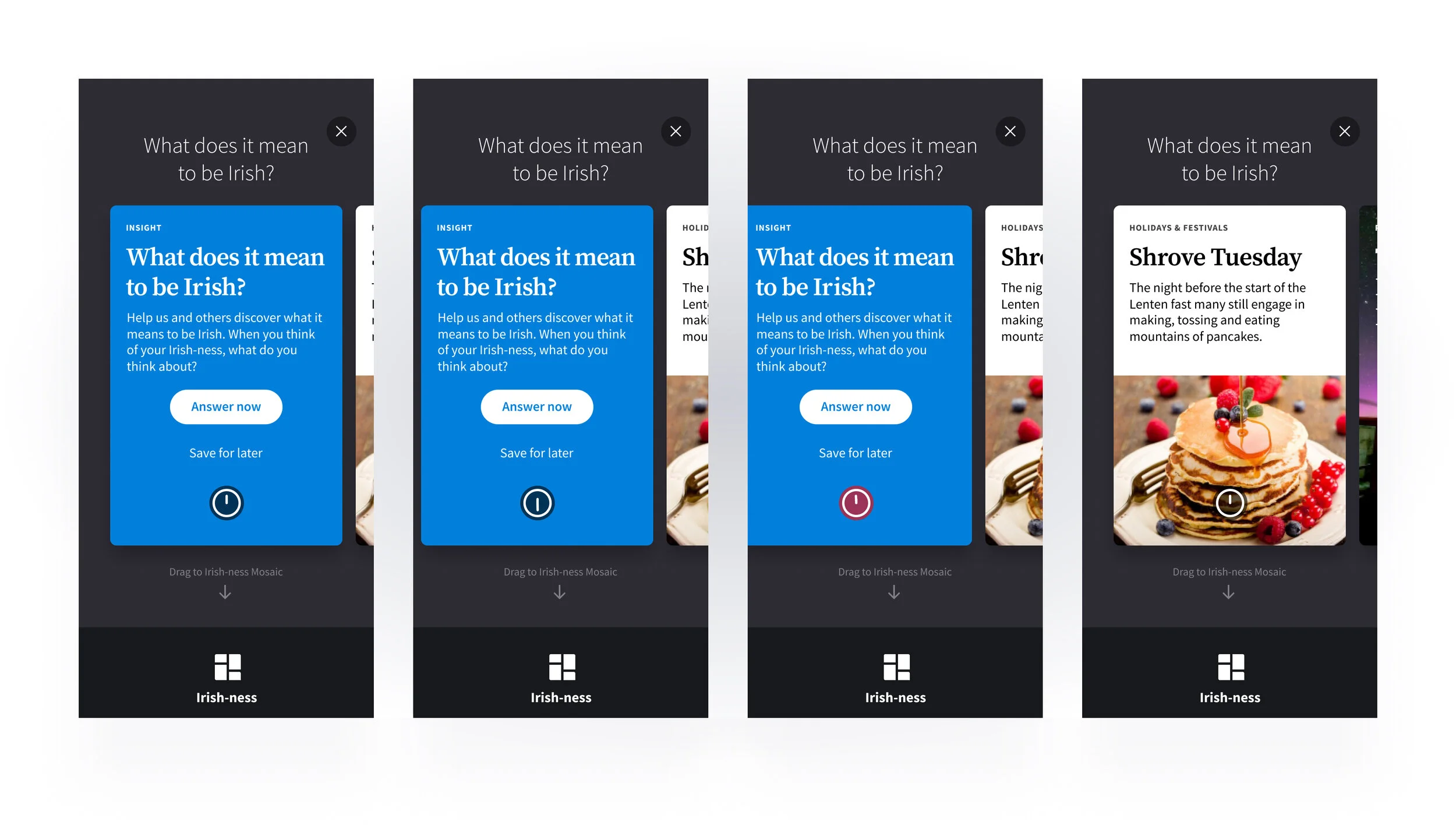
A prototype presented to a set of research participants to get an idea of the timed carousel- the movement was mostly unexpected and did not really help create the sense of urgency that was hoped for.
Final discovery belt design
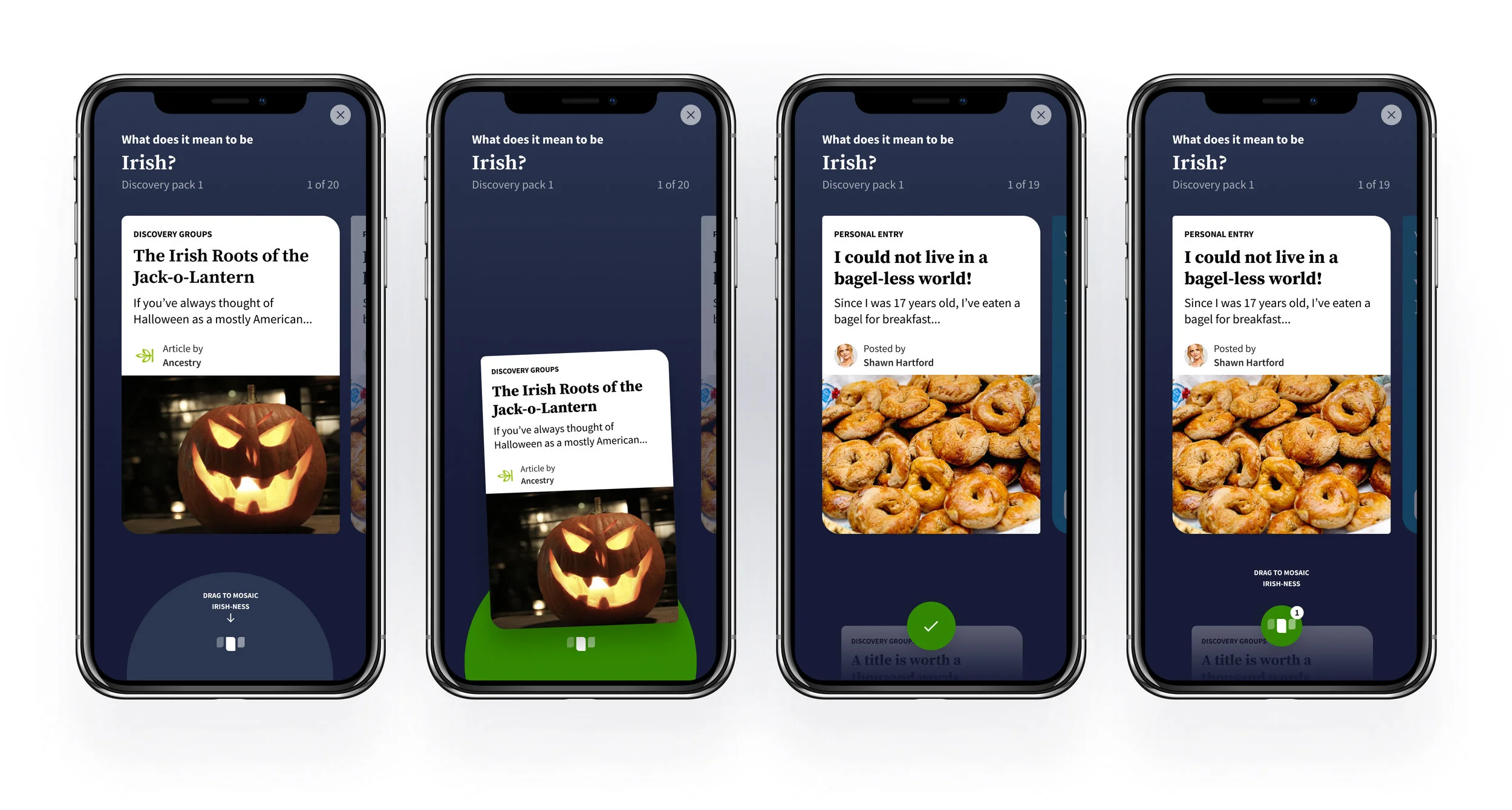
The final discovery belt enabled a smooth drag and drop stack building mechanism to engage users.
Discovery belt in the product release.
Learn while doing
Onboarding allowed the customer to collect an artifact and send them to the selected collection with the card saved automatically. This helped them understand the process of collecting cultural factoids.
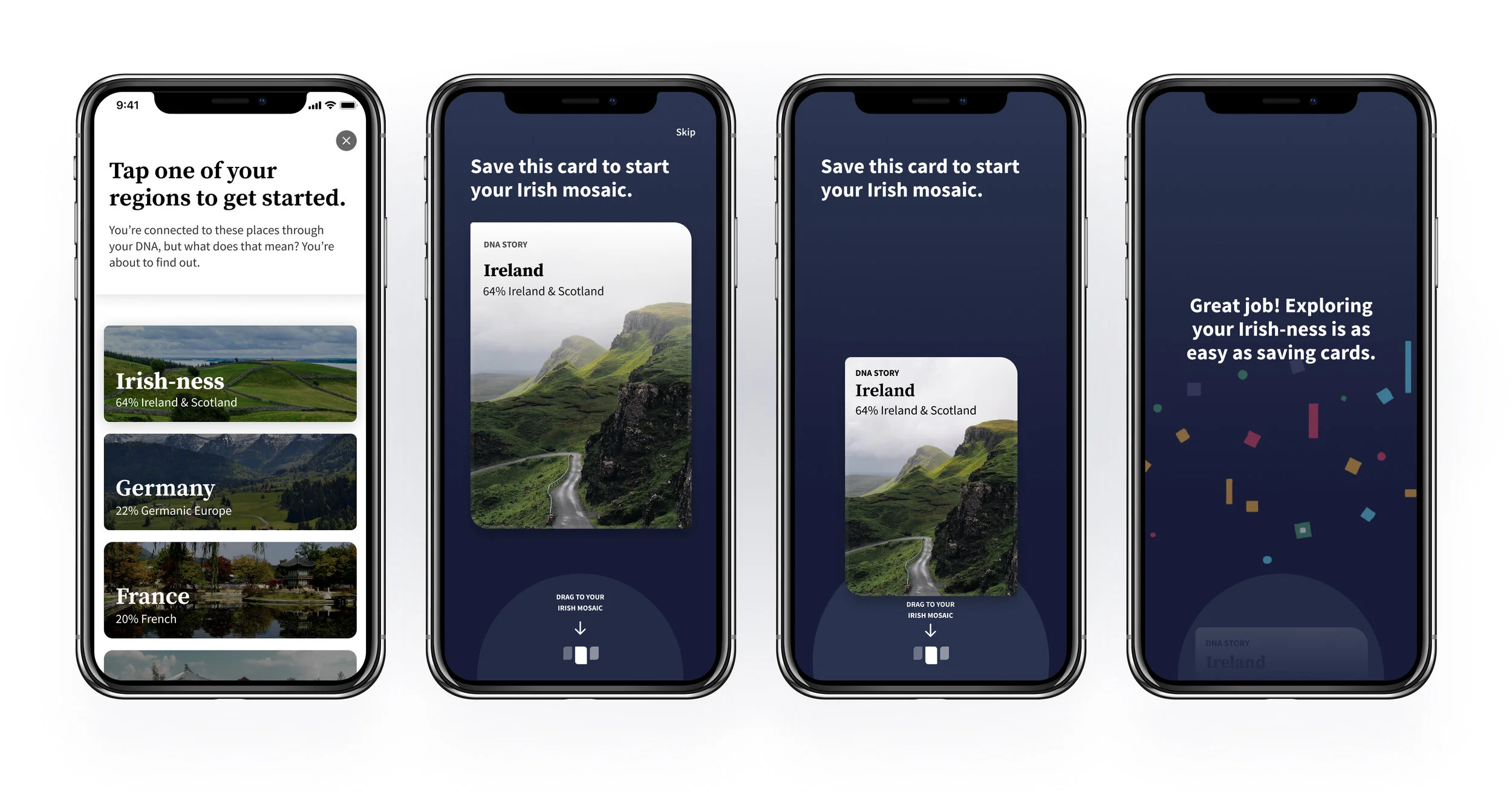
Learning the drag motion was part of the on-boarding, teaching users how to collect by collecting their first artifact.
Sharing your story
Customers were able to create their own card to add to discovery packs for other users on the platform.
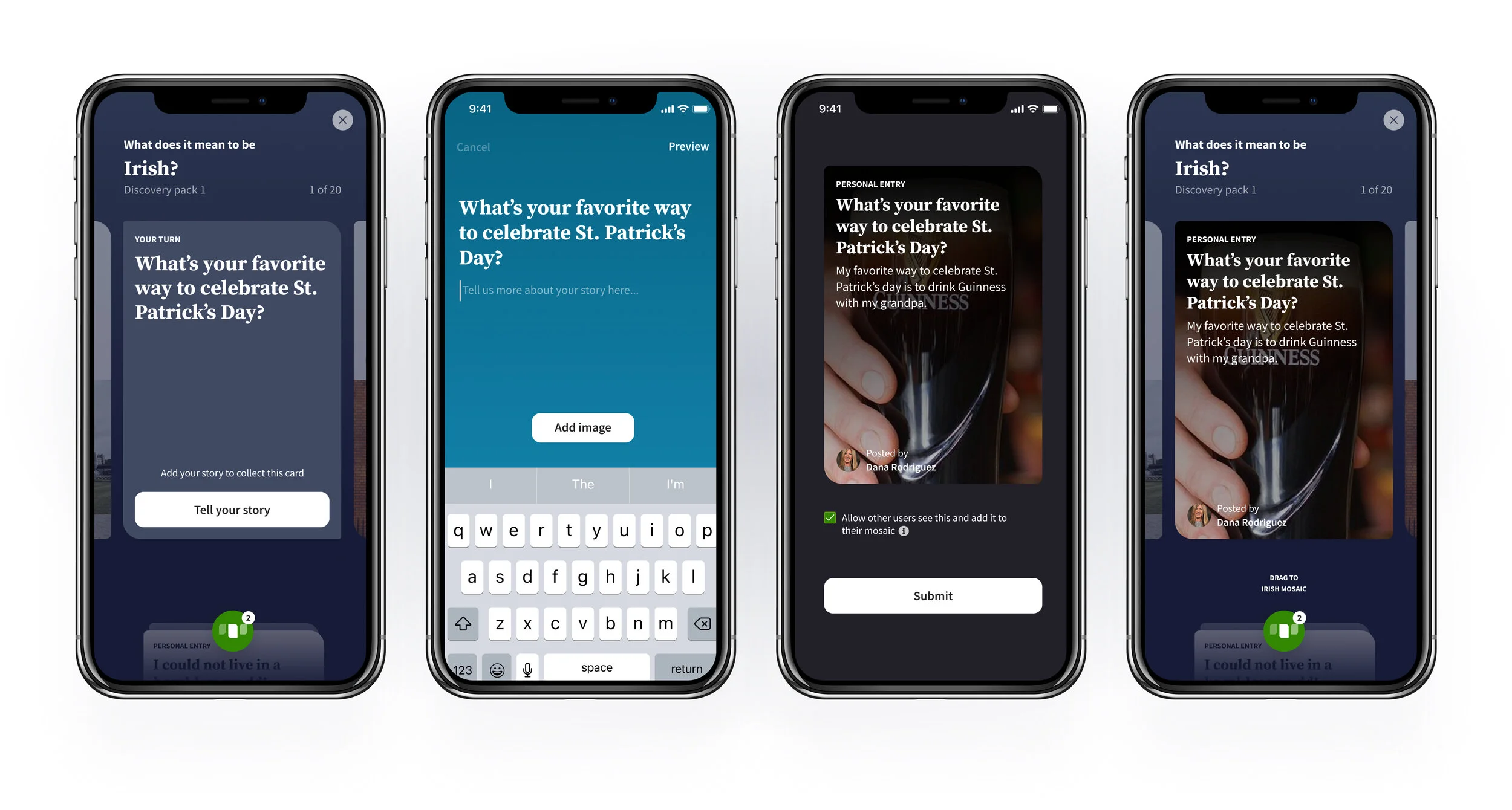
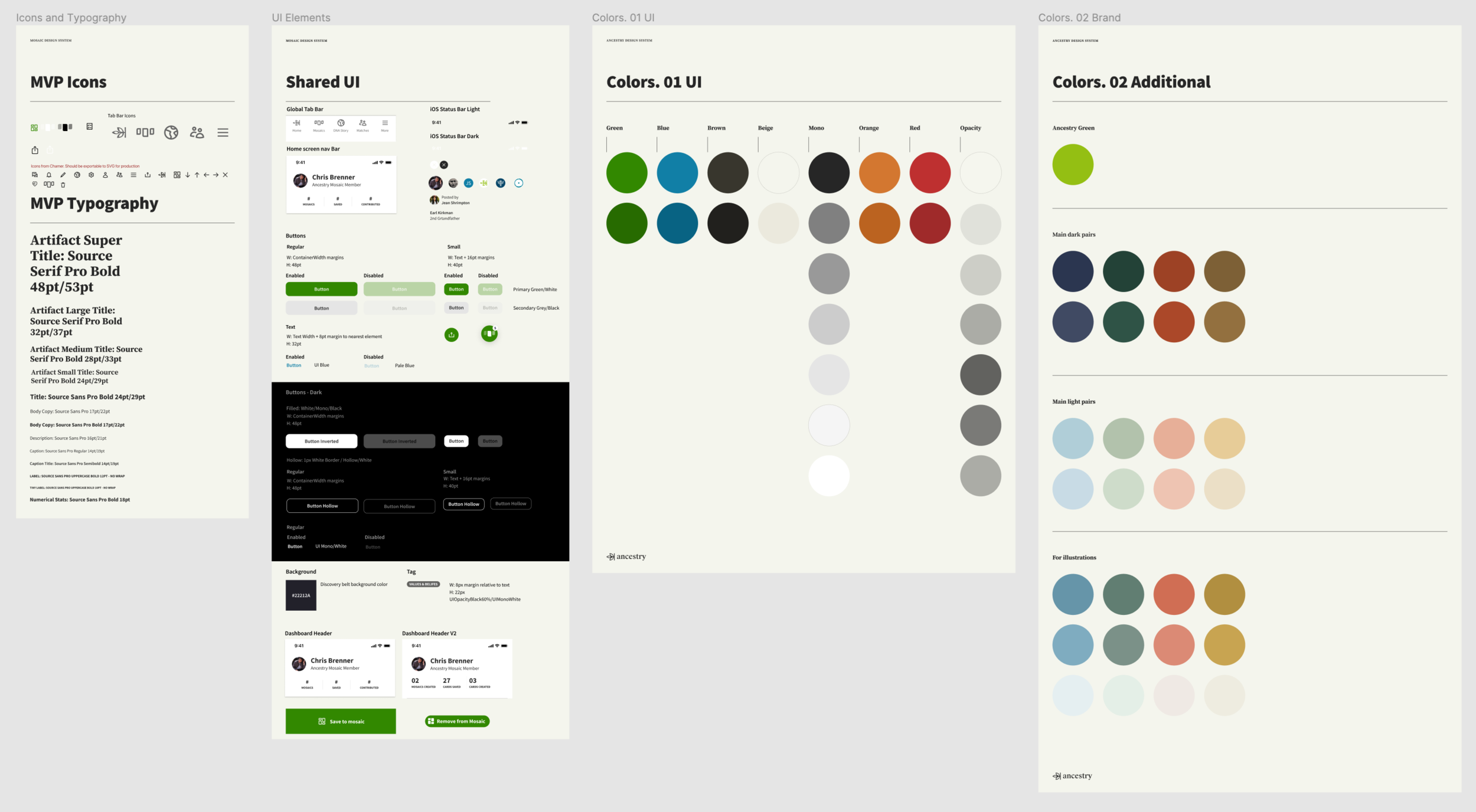
A working design system
As the product grew, sections of the design work were given to other designers so that I could focus on the overall platform experience of Mosaic. I tool the role of leading the effort of putting together a design system. This system helped drive all teams to a unified look and feel with sharable common components.
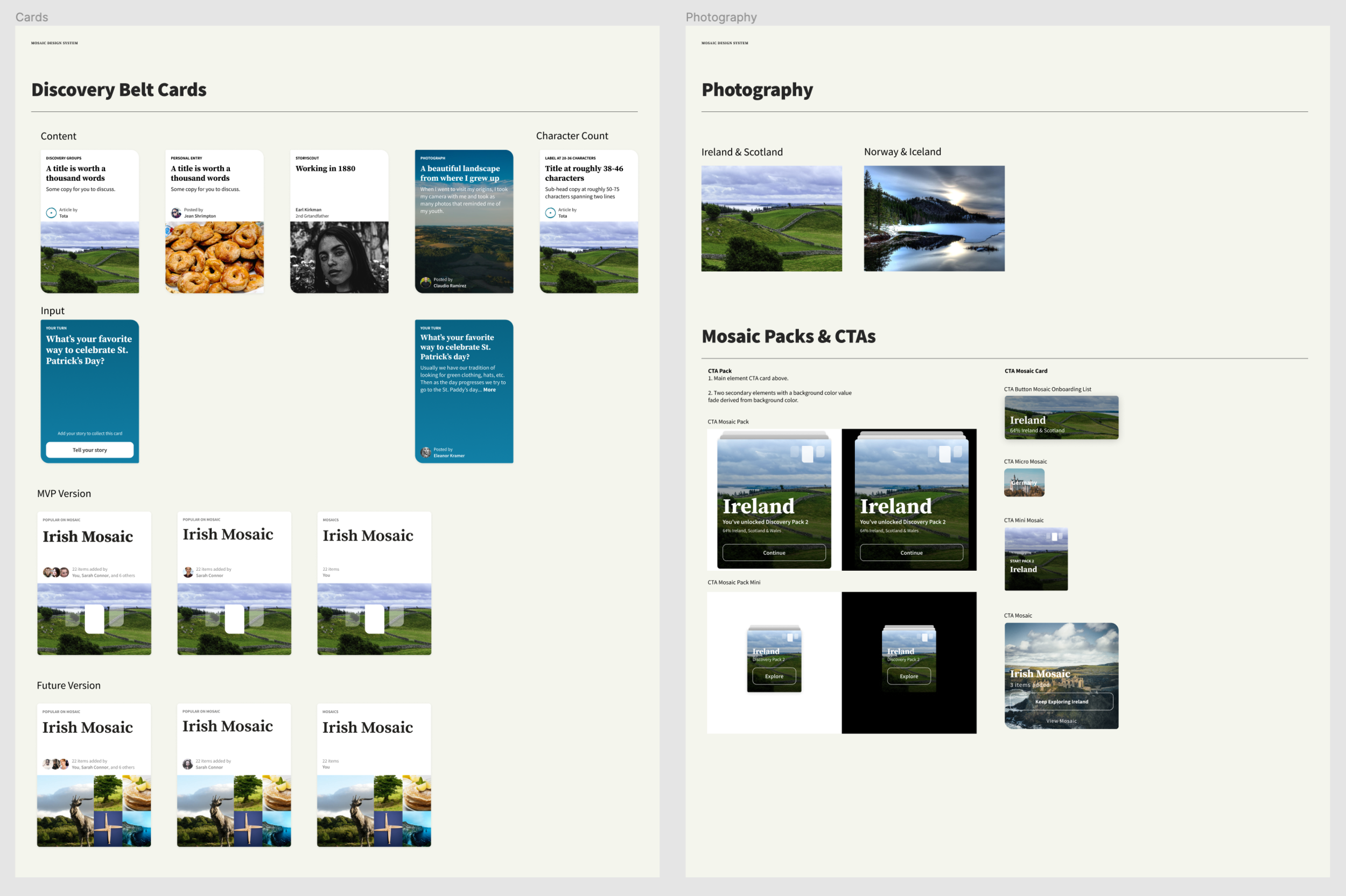
Outcome
After two months of iterative design and development, a beta version was released to 10,000 DNA customers. The results of the beta suggested that there was a need to be met for customers wanting to learn and feel more connected to their heritage. 80% of beta users created a mosaic. However, the business strategy shifted back to focus on existing applications as the cost of maintaining an external content team and a third application in our product line may create high cost for the business. There was no guarantee that these customers would pay for content or consider moving to other family applications.